
Patriotism and Supply Chains: What's Happening in the U.S. Market and What Brands Need to Know
Time : Jul 16, 2026
Patriotism and Supply Chains: What's Happening in the U.S. Market and What Brands Need to Know
In recent months, "Made in the USA" and "local sourcing" have become frequently discussed topics across the U.S. consumer goods industry. The 250th anniversary celebrations further amplified this trend - consumers voting with their wallets, brands signaling through their supply chains, and the entire market reevaluating the question of "where to source from."
For American brands that source packaging from China, does this trend mean it's time to change supply chain strategies? This article offers some observations for your consideration.
I. Patriotic Consumer Sentiment Is Real, but Value for Money Remains the Core Decision Factor
"Made in the USA" does influence the purchasing decisions of some American consumers - particularly around special moments like the 250th anniversary. It makes perfect business sense for brands to build marketing around this theme.
But it's equally important to recognize that:
American consumers have never lost their sensitivity to price. With ongoing economic uncertainty, value for money remains the top decision factor for the vast majority of households.
Not all product categories benefit equally from the "Made in the USA" narrative. For fast-moving consumer goods and daily necessities, shoppers care more about product quality, user experience, and price - the origin label is often overestimated in its influence.
The 250th anniversary is a one-time moment, not a permanent shift in market structure.
What this means: Patriotic consumption is a wave brands can ride, but it's not a tide that changes the course.
II. A Comparative Look at U.S. and Chinese Flexible Packaging Suppliers
Here is an objective comparison across several key dimensions:
Cost
This is where Chinese suppliers offer their most significant advantage. For flexible packaging products of comparable quality, Chinese factory ex-works prices are typically 30%–50% lower than those of U.S. manufacturers. This gap stems from structural factors including labor costs, energy expenses, and equipment depreciation. For high-volume routine orders, even after accounting for ocean freight and customs clearance, the total cost advantage remains substantial.
Industry Chain Integration and Product Range Coverage
From film extrusion, gravure cylinder engraving, and high-speed printing to multi-layer lamination, the world's most complete and efficient flexible packaging industry chain is concentrated in China. This means when a brand needs multiple product types, multiple specifications, and a one-stop solution, a Chinese factory's integration capability is unmatched. One supplier can cover virtually every pouch style - from flat pouches and stand-up pouches to flat-bottom and quad-seal designs, plus roll stock - dramatically reducing communication and management overhead for brands. U.S. manufacturers often need to retool and switch production lines between different product categories, whereas China's industrial clusters have developed a fine division of labor that makes category switching virtually seamless.
Production Capacity
Major Chinese flexible packaging facilities typically operate dozens of production lines in parallel, delivering high scheduling efficiency and reliable lead times when handling large-volume orders or serving multiple clients simultaneously. U.S. plants generally operate far fewer machines per facility, which can create capacity constraints when facing sudden surges in large-volume demand.
Sampling Efficiency
The upstream and downstream ecosystem within China's flexible packaging industrial clusters is highly coordinated - engraving, printing, lamination, and bag-making suppliers are often located within tens of kilometers of one another. This means the cycle from design file approval to physical sample completion can be closed in an exceptionally short timeframe. This speed is built on industrial agglomeration and is difficult to replicate in regions where the industry is more dispersed.
Lead Time: The Geographic Advantage of U.S. Suppliers
U.S. suppliers have a natural geographic advantage - there is no ocean transit time, and goods can move from factory to brand warehouse in just a few days. Additionally, international shipping carries uncertainties including container availability, weather disruptions, and port congestion, which are unavoidable variables. This is an undeniable advantage for U.S. suppliers when it comes to time-sensitive orders.
Chinese suppliers can significantly shorten production lead times through manufacturing efficiency, but the transoceanic shipping time cannot be eliminated. For orders where every day counts, U.S. suppliers are the more appropriate choice.
III. How Brands Should Decide: Matching Scenarios to Suppliers
Based on the analysis above, here is a framework for decision-making across different scenarios:
In short: For ultra-urgent needs, source locally. For cost, variety, and capacity, source from China. The two are not in opposition - they can form a complementary supply chain strategy depending on order type.
One nuance worth noting: for "large-volume rush orders," many might instinctively think "urgent means source locally." However, if the urgency is paired with massive capacity requirements, U.S. plants may struggle due to limited single-facility output. In such cases, Chinese factories' equipment density becomes a distinct advantage. Brands should evaluate both "time sensitivity" and "capacity needs" as two separate dimensions when making decisions.
IV. After the 250th Anniversary: What's Changing and What Isn't
Now that the 250th anniversary has passed, we see several clear trends emerging:
Cost pressures are not going away. After experiencing the "patriotic premium" of Q2, brands' finance departments will inevitably reevaluate their packaging procurement cost structures. For routine, non-marketing-driven orders, value for money will remain the top consideration.
Long-term supply chain relationships are more reliable than short-term sentiment. The 250th anniversary was a one-time event. Smart brands won't restructure their long-term supply chains based on a single moment - they will make decisions based on enduring factors like cost, quality, and service.
The second-half peak season is the real battleground. August through December brings back-to-school, Halloween, Thanksgiving, Black Friday, and Christmas - this is the period of the year with the highest consumer spending. Brands should prioritize their attention and resources here.
V. Our Position
Tianyuan Packaging is a Chinese flexible packaging manufacturer with clients around the world, including many American brands.
Our position is straightforward:
We respect American consumers' sentiments and every brand's legitimate sourcing decisions
We acknowledge U.S. suppliers' geographic lead-time advantage, and we also recognize Chinese suppliers' strengths in cost, capacity, and product range coverage
We believe the optimal supply chain strategy for American brands is not a binary "either/or" choice, but a thoughtful allocation across order types - letting U.S. and Chinese suppliers each play to their strengths
Our job is not to convince clients to send "every order to China." Our job is to be there when clients need us - whether for high-volume routine orders, one-stop multi-category sourcing, or rapid sampling - with reliable quality, competitive pricing, and professional, responsive service.
Closing Thoughts
Patriotism is about emotion. Supply chains are about rationality. Great brands are never driven entirely by one or the other - they find the right balance that best serves their strategy.
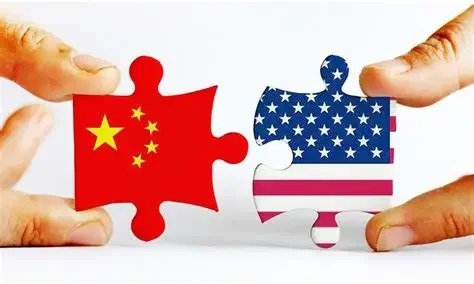
In flexible packaging, the relationship between Chinese and U.S. suppliers is not a zero-sum game. They can complement each other across different order scenarios. What truly matters is whether a brand has a clear, rational supply chain strategy that supports its long-term growth objectives.
We welcome you to reach out for samples and a quote - let the product itself validate everything we've said here.
Related Image(s)
Related Posts
Online Message
Leave A Message
If you are interested in our products and want to know more details, please leave a message here, we will reply you as soon as we can.