
When you pick up a snack bag, a coffee pouch, or a vacuum pack, what catches your eye first is most likely the design, the color, and the logo. These nice-looking prints don't just appear. Behind them are two key steps: plate making and printing. Let us explain in the simplest way possible.
First, what is plate making? Think of it as carving your design onto a metal cylinder. This cylinder works like a giant stamp. Its surface is covered with tiny dots. The deeper the dot, the darker the color. The shallower the dot, the lighter the color. Once the cylinder is ready, printing begins. Rolls of film run through the machine, and the design gets stamped onto them. Think of it like playing with a rubber stamp as a kid, only our stamp is a metal cylinder over a meter long.
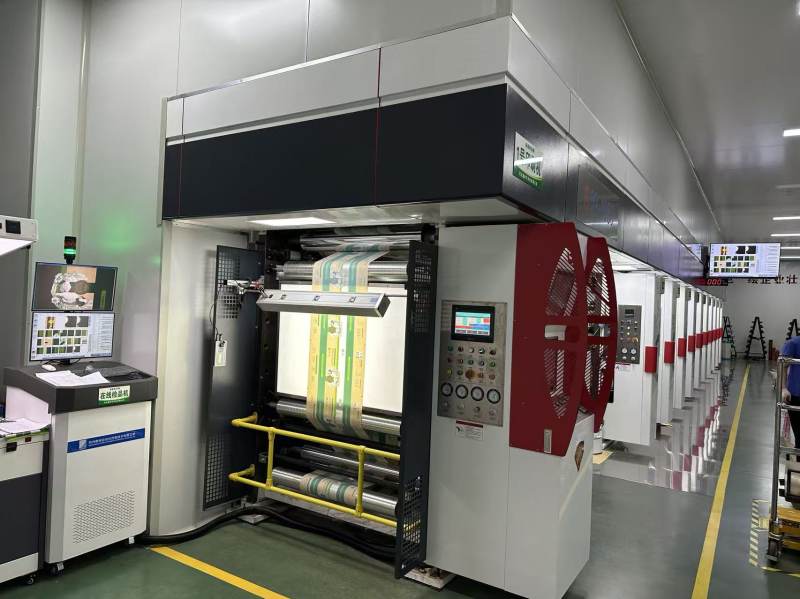
Traditional printing is not complicated either. When the machine runs, the cylinder rotates and picks up ink. Then a blade scrapes off the extra ink, leaving ink only in the tiny dots. Finally, the cylinder presses against the film, and the design transfers over. Flexible packages are usually printed in multiple colors stacked together, one color per cylinder. The film goes through each cylinder one by one, and a full-color design comes out at the end. This method is great for large production runs. It is fast, stable, and the colors look great.
Now let's talk about plateless printing, which is designed for small batches. Traditional printing requires making metal cylinders, which means higher upfront cost and larger minimum order quantities. Plateless printing is different. It doesn't need cylinders. Your design can go straight from the file to the machine. Sounds very convenient, right? But there are a few things to note. We only do small batches, starting from one hundred pieces. Also, the sizes are limited. We only offer a few fixed sizes. This helps keep the cost low, so you don't pay more than necessary. If you want to test the market first, or don't need a large quantity yet, plateless printing is a great fit. In short, large volume goes with traditional printing, and small volume goes with plateless printing. Tianyuan Packaging offers both.
You just need to tell us how wide and how long the bag should be, whether you want an aluminum foil layer or clear film, whether you want a glossy or matte finish, and roughly how many pieces you need. We'll handle the rest — plate making, printing, laminating, slitting.
To sum up, traditional printing with plates is best for large volumes. It gives you great colors, fast speed, and the cost per bag comes down nicely. Plateless printing is best for small batches starting from one hundred pieces. There is no plate-making cost, and sizes are limited, but the entry barrier is low and it is very flexible. At Tianyuan Packaging, we don't pick and choose orders. Big or small, we can do both. What matters most is printing your bags right, making them well, and delivering them on time. Have a packaging need? Just talk to us.
Related Image(s)
Related Posts
Online Message
Leave A Message
If you are interested in our products and want to know more details, please leave a message here, we will reply you as soon as we can.